

The Bungalow That Grew Up
Roof extension · Design concept · Herne Bay, Kent
There are approximately 1.7 million bungalows in the UK. They represent some of the most generous plots, most flexible footprints, and most consistently undervalued potential in the entire housing stock.
And almost nobody is looking up.
Bungalows are the quiet opportunity of the British property market. Single storey, wide footprint, usually detached or semi-detached, sitting on land that terraced houses would never have. The average bungalow owner is renovating horizontally — extensions, conservatories, reconfigured kitchens — when the most intelligent and often most affordable move is vertical.
A roof extension on a bungalow typically costs 30–40% less per square metre than a ground floor extension on the same property, largely because the foundations are already doing the work. It adds genuine additional floor area, increases property value disproportionately, and — when done well — transforms how the entire building feels from both inside and outside.
EXISTING
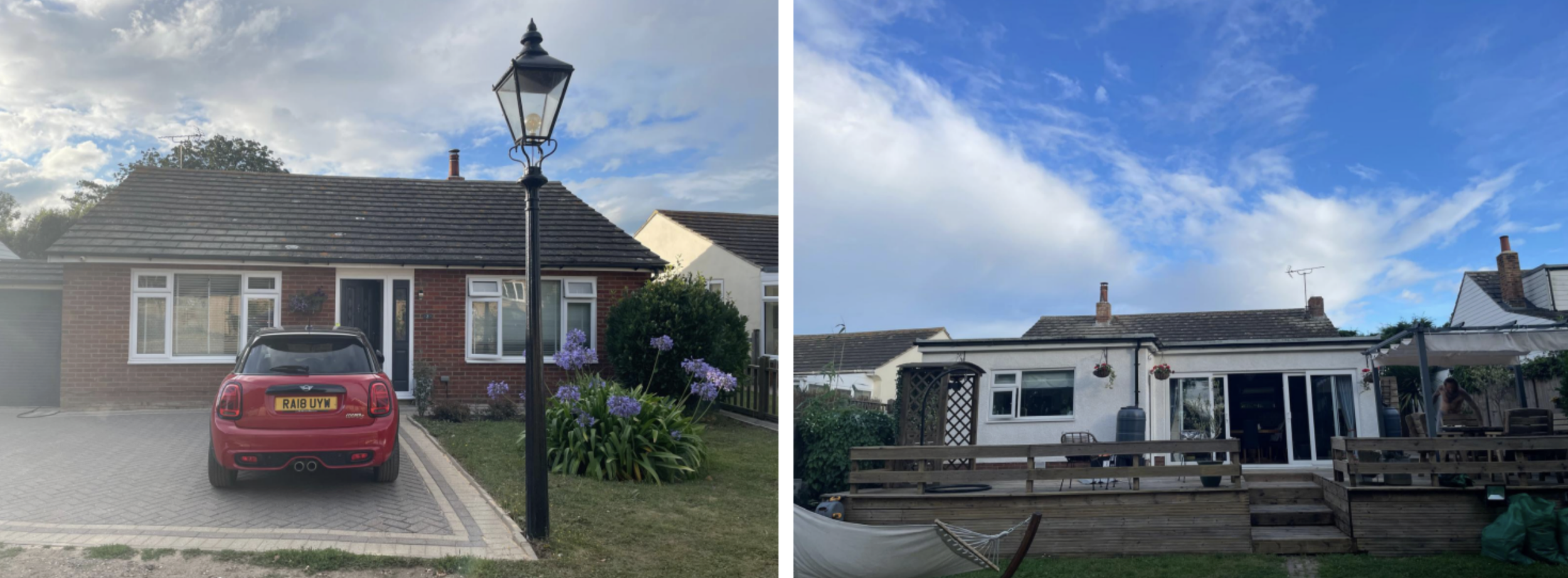
This one in Herne Bay belonged to a couple with something many bungalow owners actually have but rarely recognise: enough space. The ground floor worked. The layout wasn't the problem. What they wanted was a room that was genuinely separate from the rest of daily life — part hangout, part music room, part retreat. Upstairs, above everything, with the garden below and light coming in from every direction it could.
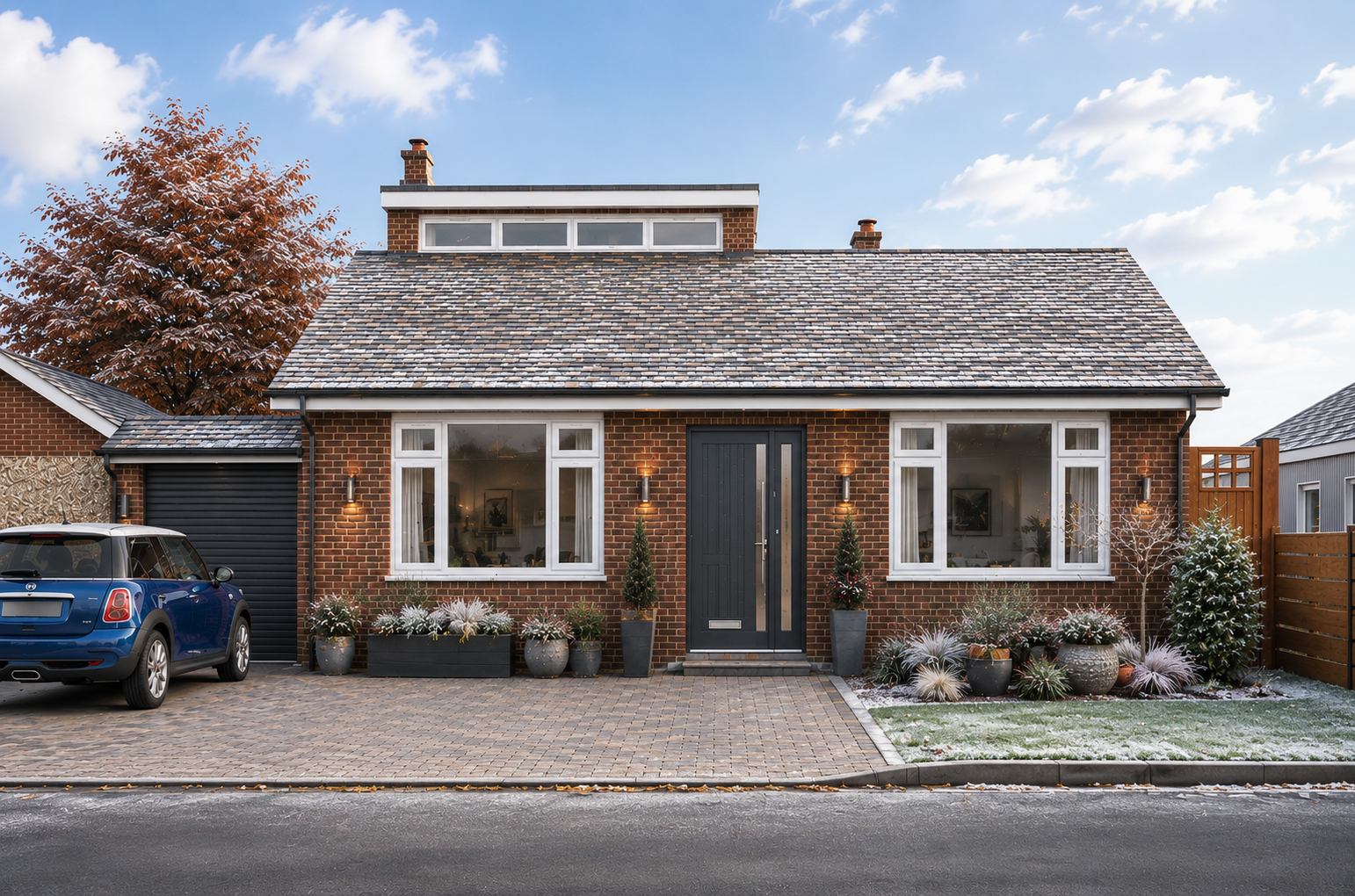
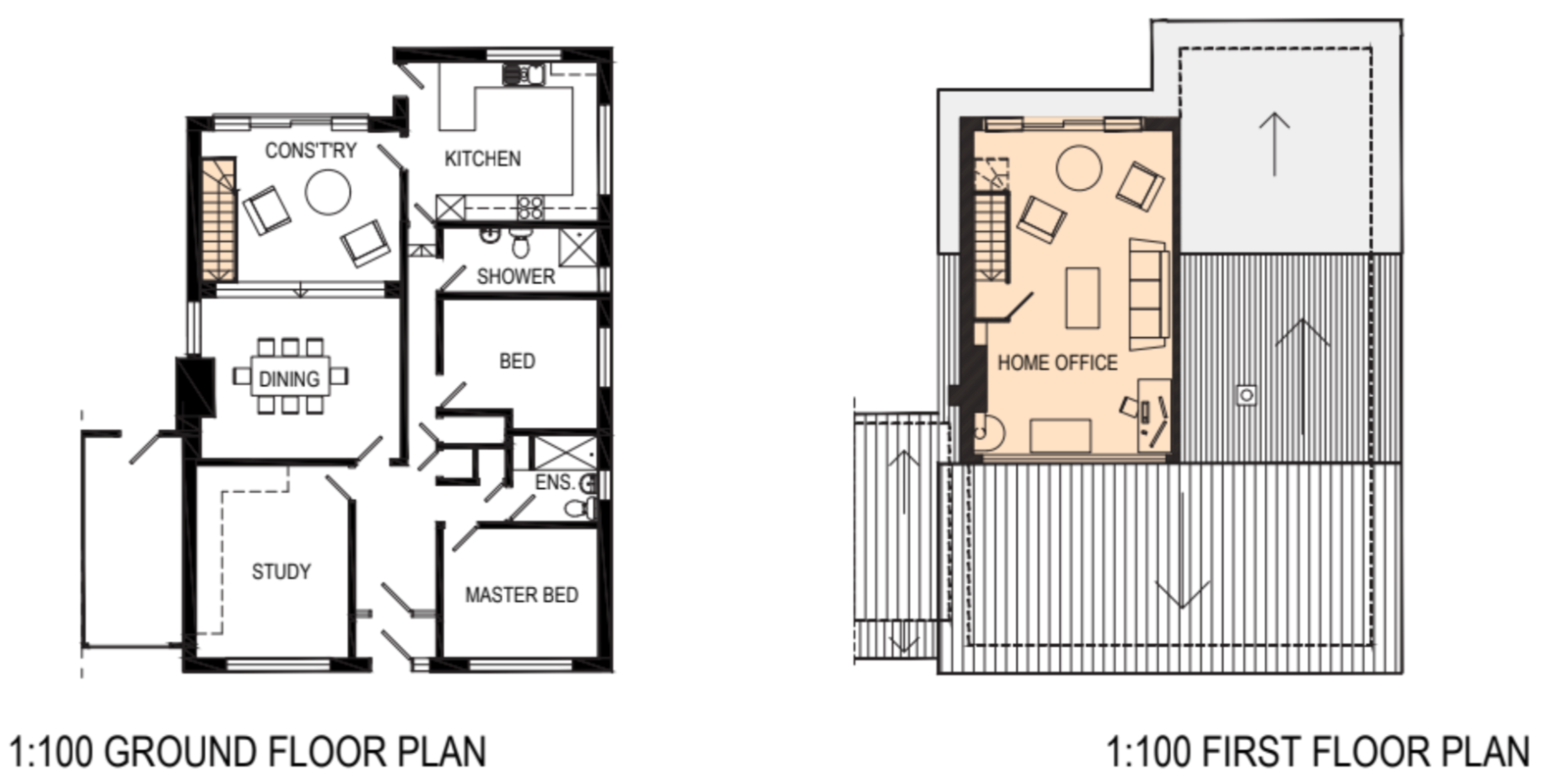
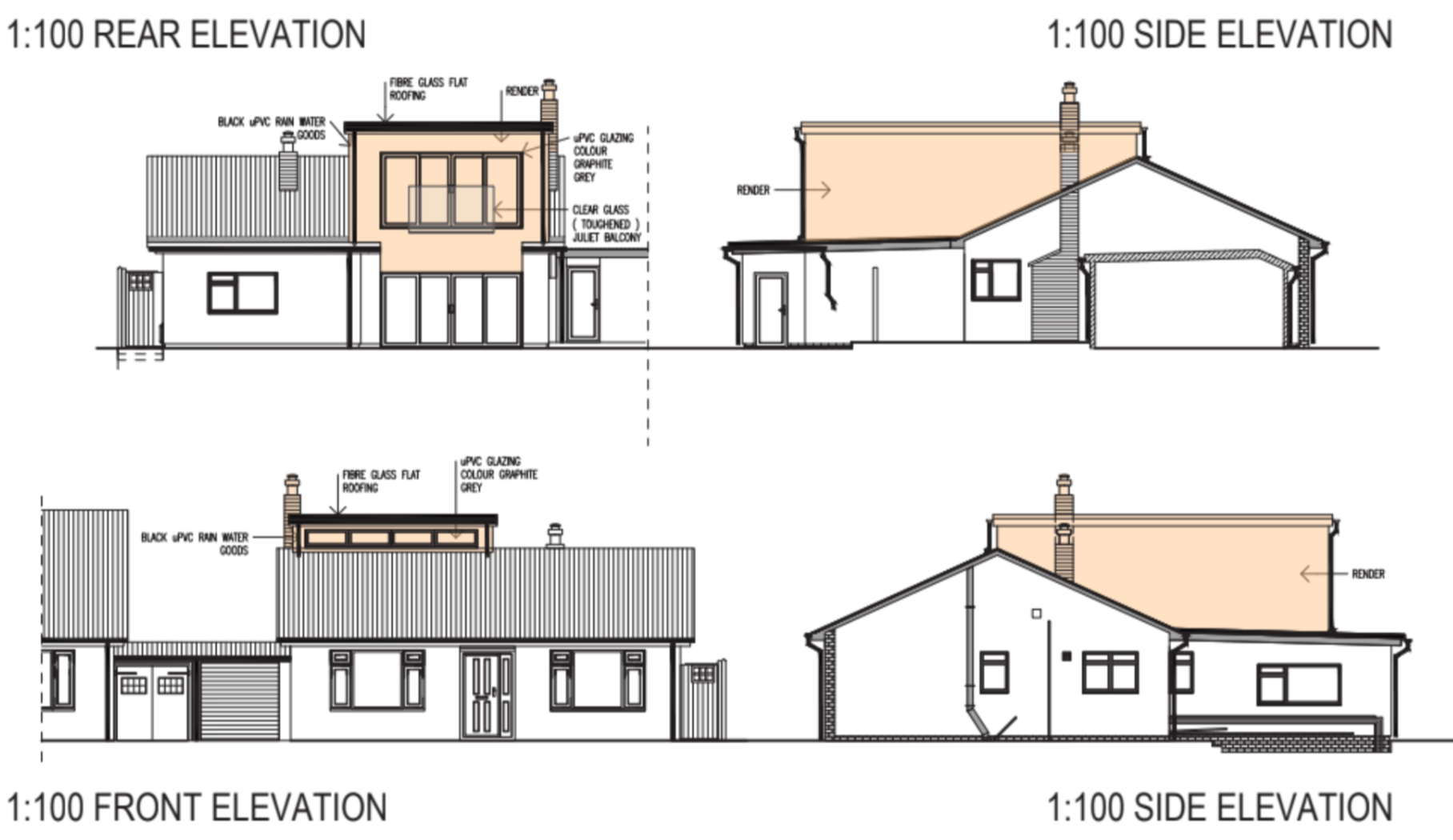
The brief was specific: a large opening at the rear facing the garden. Maximum light. And critically — an addition that looked like it had always been there. Not a box dropped on top. Not an afterthought. Something coherent with the building it was sitting on.
Neighbours on both sides made this more complex than it sounds. Every decision about height, roofline, and fenestration had to work in relation to both boundaries simultaneously. The rear elevation opens generously. The street elevation reads quietly. Light comes from multiple directions without any single window compromising either neighbour relationship.
PROPOSAL
This is also worth saying clearly: building up is not always the answer. New Generation Architecture starts with the question of whether anything needs to be built at all. In many bungalows, a thoughtful reconfiguration of the existing ground floor — better zoning, improved flow, light brought in differently — delivers more liveable change than any extension could.
But sometimes the brief is the brief. They wanted a room above the house, facing the garden, full of light. That is what they got.


